Quick answer: 11 ways to get personal training clients
- Work the gym floor and help members before you sell.
- Turn a free first session into a paid package with a clear offer.
- Partner with your gym's front desk and new-member onboarding.
- Post testimonials and educational content on Instagram.
- Reply to people asking for a trainer on Threads, Reddit and Facebook groups.
- Set up a Google Business Profile and collect reviews.
- Ask for referrals at the right moment, with a simple reward.
- Partner with physios, nutritionists, clinics and running clubs.
- Pick a niche, such as clients over 45.
- Launch a short challenge or small group in January.
- Keep clients engaged between sessions, so they stay and refer friends.
The sections below cover each one with numbers, scripts and what to do this week. They work for trainers in a gym and for online coaches.
Why is it hard to get personal training clients?
Getting clients is the main reason trainers leave the job: by industry estimates, more than half of trainers stay in the industry two years or less. Most quit because their client pipeline is unpredictable, not because they can't coach.
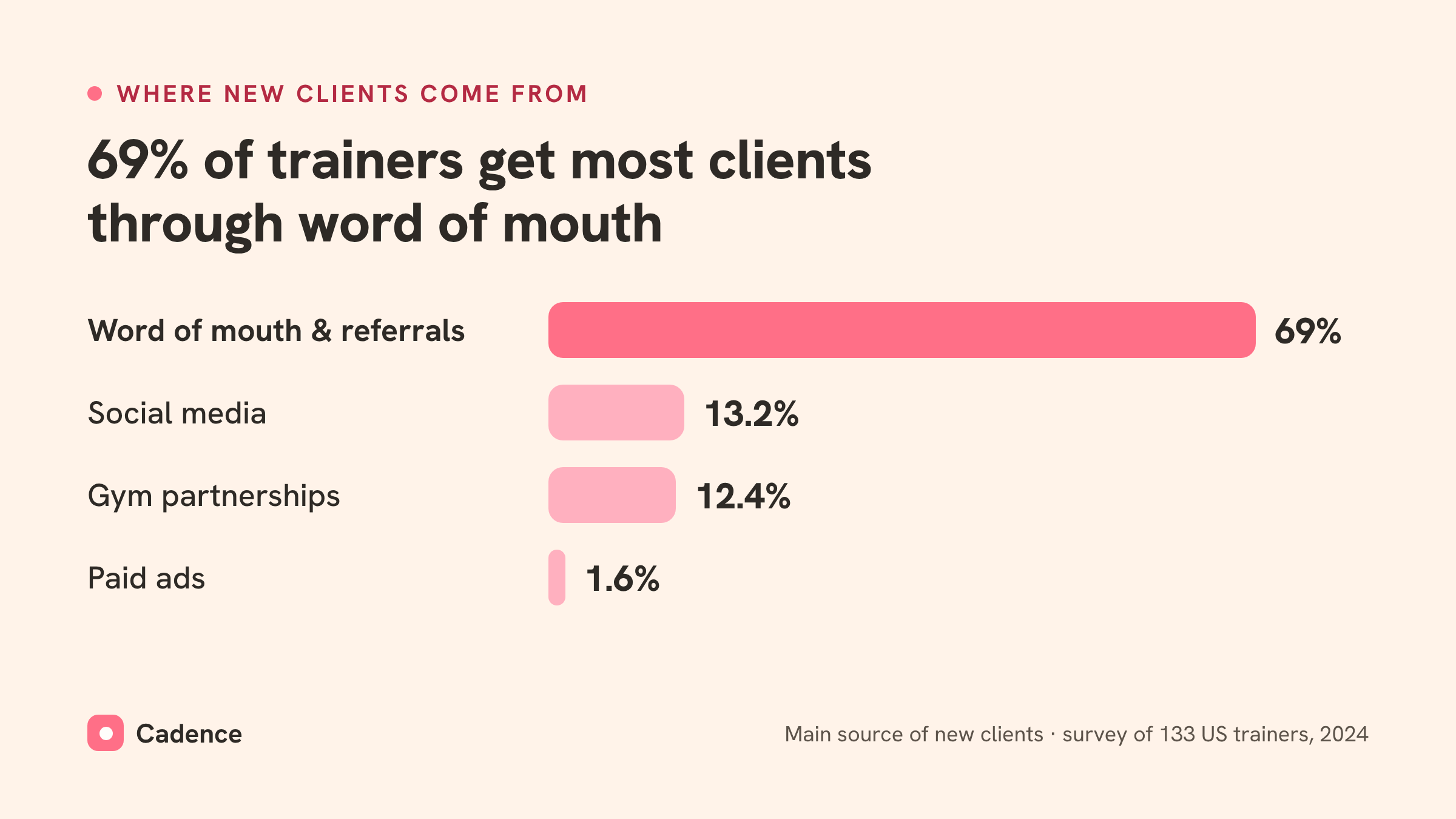
A 2024 survey of 133 US trainers shows where new clients actually come from:
Three more findings shape the strategy in this guide:
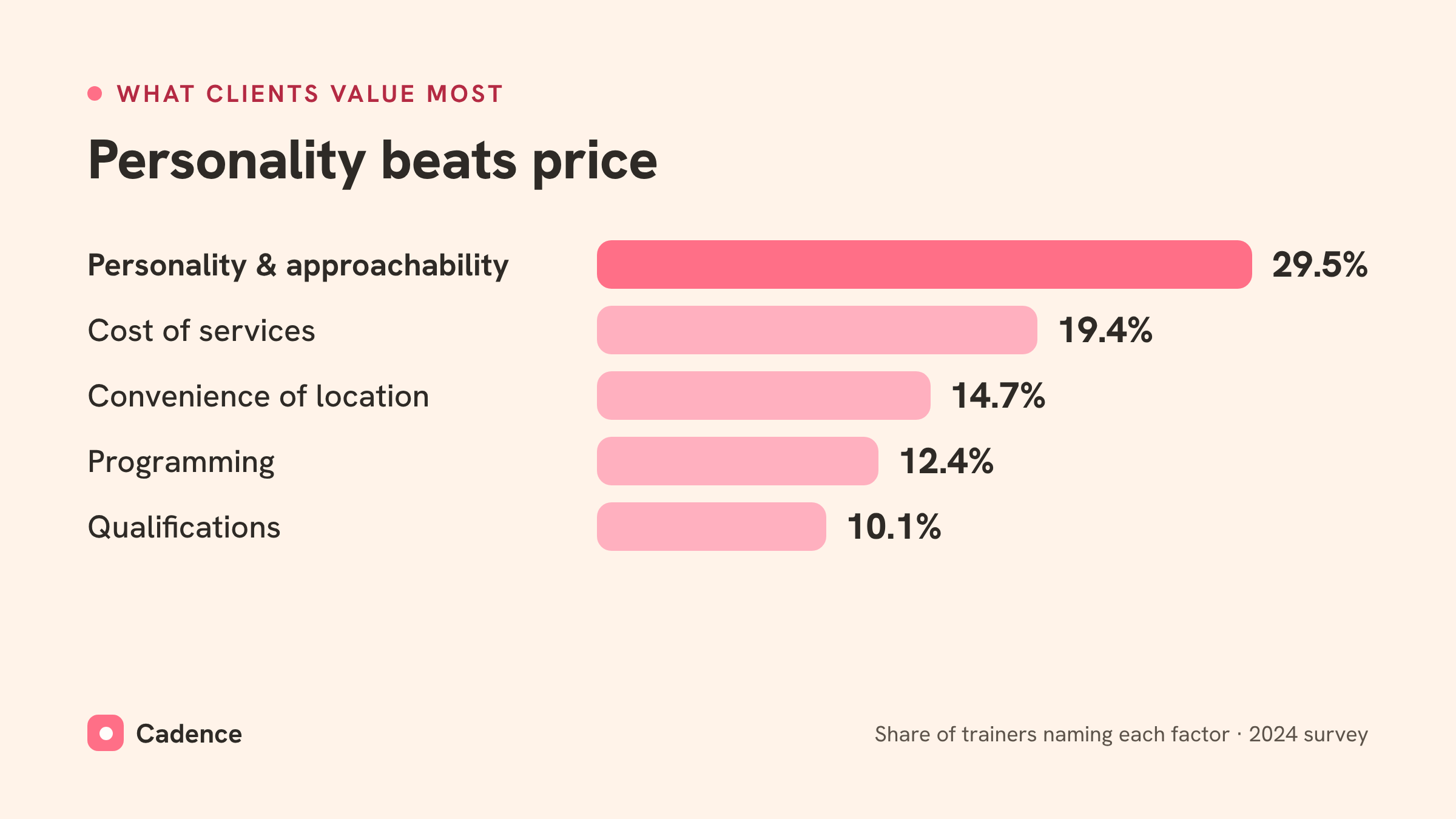
- Personality sells more than price. Clients rank trainer personality and approachability first (29.5%), ahead of cost (19.4%) and location (14.7%).
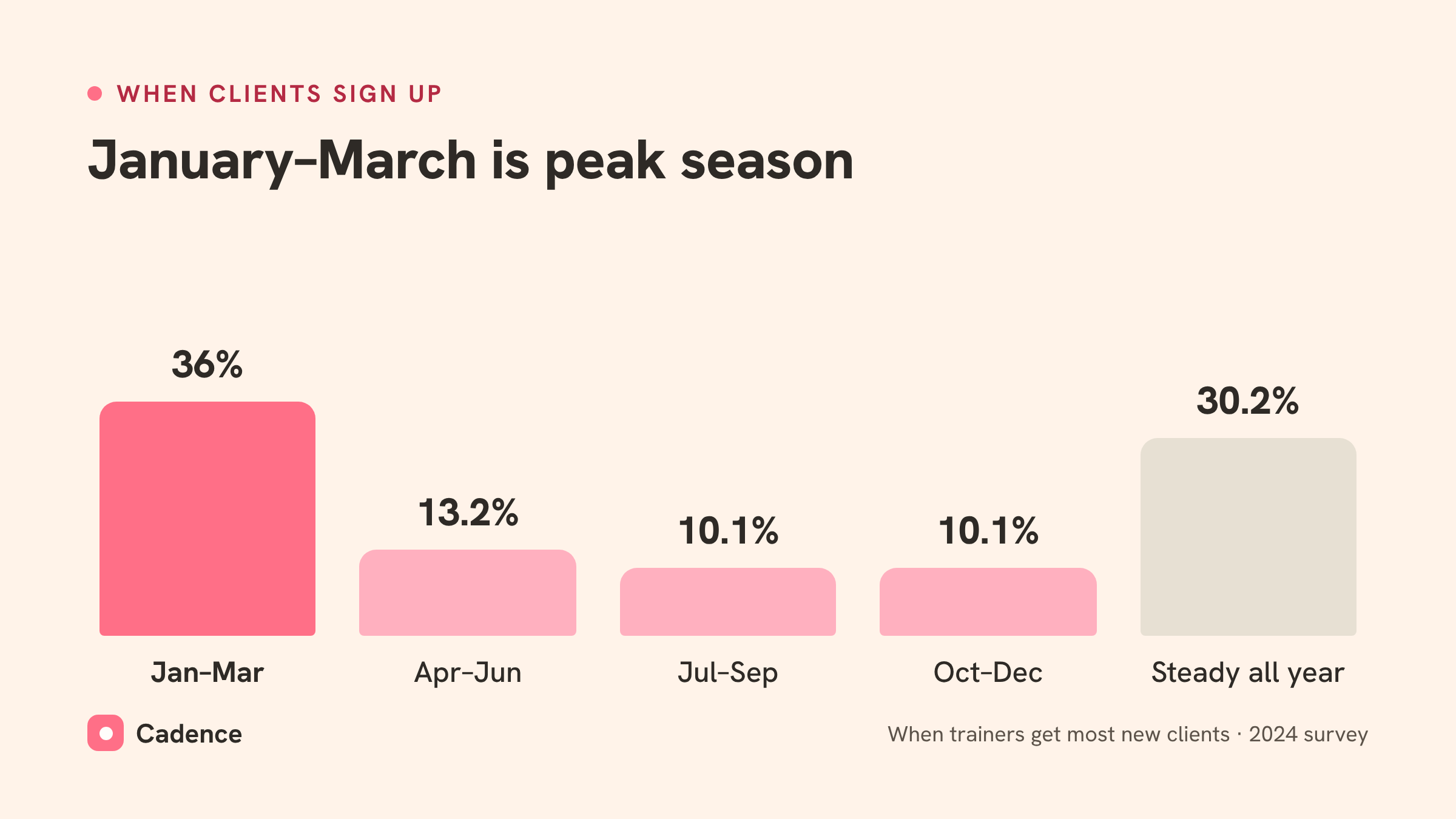
- January is your biggest month. 36.4% of trainers get most new clients in January, and 36% of sign-ups land in January to March.
- Few people search for a trainer. In a survey of 1,000 people who hired a trainer, fewer than 10% found them through a search engine. Clients come through people they trust.
How to get personal training clients in a gym
Your gym is full of potential clients: only about 22.6% of health club members work with a personal trainer. The other three quarters already pay for a membership and already show up. These three methods turn them into clients.
1. Work the gym floor before you sell
Members buy from the trainer they already know. Spend your free hours on the floor, not on your phone.
- Fix one thing for a member: a setup, a cue, a safer grip. Keep it under a minute.
- Learn names and goals. Write them down after your shift.
- Come back a week later and ask how it went. That second conversation is where most sales start.
This is the in-gym version of word of mouth. You are giving members a reason to say your name to their friends.
2. Turn a free first session into a paid package
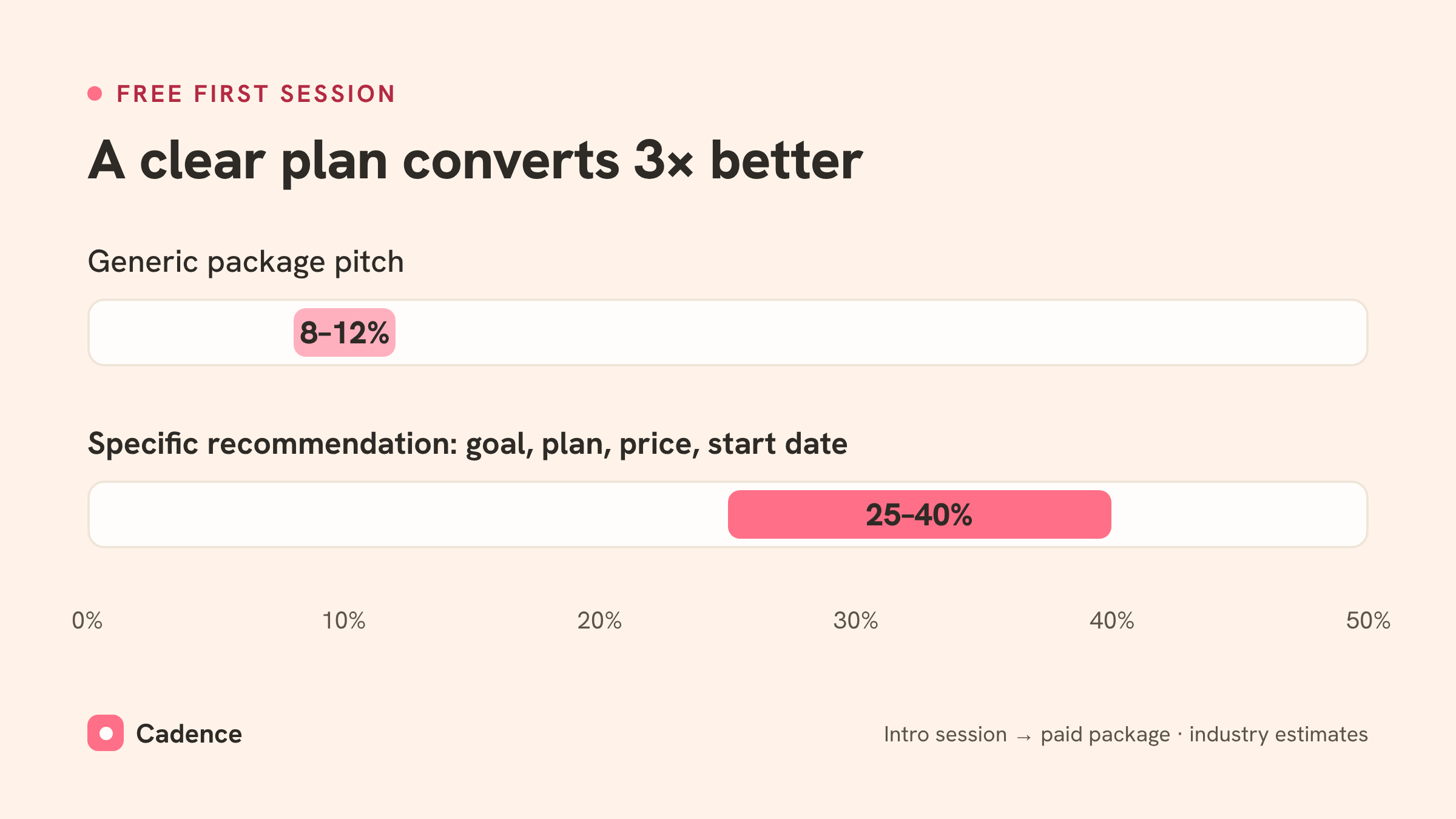
62% of trainers use a free consultation, free trial or discount to convert new clients. The free session itself does not sell. The structure does. Industry estimates put intro-session conversion at 25–40% when the trainer ends with a specific recommendation, and 8–12% with a generic package pitch.
A simple structure for a 45-minute first session:
- 10 min: goals and history. Ask what they want, why now, and what stopped them before.
- 25 min: a short workout built on that goal. Show one quick win they can feel.
- 10 min: a specific plan. "Two sessions a week for 8 weeks, then we review." Name the price and the start date.
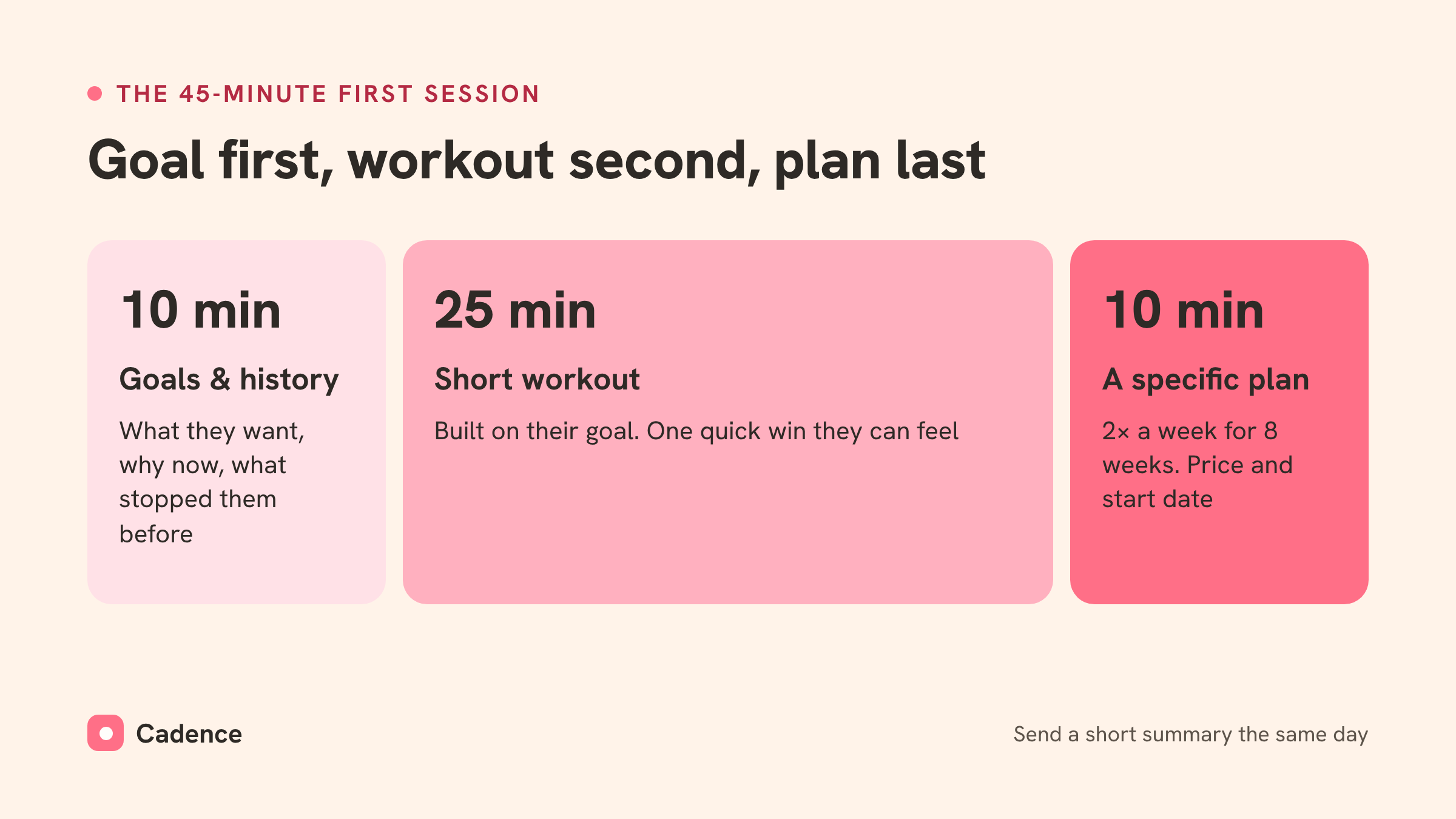
Send a short summary the same day: their goal, what you saw, and the plan. Follow up once after 2–3 days if they don't reply.
3. Partner with the front desk and new-member onboarding
Gym partnerships are the main source of clients for 12.4% of trainers. New members are the easiest win: they joined for a goal and don't know where to start.
- Ask the manager to book every new member into a free intro with a trainer in their first week.
- Give the front desk a one-line description of who you help, such as "strength for beginners over 40".
- Run a free 20-minute "how to use the gym" class once a week for new members.
How to get personal training clients online and on Instagram
Online channels work best when they extend word of mouth, not replace it. Half of trainers (50.4%) get only 0–25% of new clients from online sources, and 46.5% don't use social media at all. That leaves room for the trainers who do it well.
4. Post testimonials and educational content on Instagram
Instagram is rated the most effective platform for finding clients (27.9%), ahead of Facebook (24%). The content that works best is client testimonials and success stories (21.7%), then educational posts (17.1%) and workout videos (10.9%).
- Make your profile answer three questions: who you help, what result they get, and how to start ("DM 'START'" or a booking link).
- Post one client story a week. A short quote, the goal, and what changed. Always ask permission first.
- Teach one thing per post. Answer the questions your clients ask you in sessions.
- Use Stories for proof. Check-in screenshots, PRs, messages from clients (anonymised).
Age matters here. 81% of trainers whose clients are 45 and under use social media to recruit, but only 29% of those training clients over 46 do. If your clients are older, put more effort into referrals and local partnerships.
5. Reply to "I need a trainer" posts
Every day people post on Threads, Reddit and local Facebook groups that they are looking for a trainer. Most never get a useful answer.
- Search Threads and Facebook groups for "looking for a personal trainer", "need a trainer" and "online coach" plus your city.
- Reply in public with one useful tip for their goal, then mention what you do in one line.
- Follow each community's rules. On Reddit, help first and share links only when asked.
This works because the person has already decided they want a trainer. You only have to be the helpful one who showed up.
6. Set up a Google Business Profile and collect reviews
Even though few clients search for a trainer, the ones who do check reviews. 97% of consumers read reviews for local businesses, and 41% always read them. 45% now ask ChatGPT or other AI tools for local recommendations.
- Create a free Google Business Profile with your service area, photos and prices.
- Ask every happy client for a review after a milestone, such as their first PR.
- Reply to every review. Recent, regular reviews matter more than a long list of old ones.
How to get personal training clients without social media
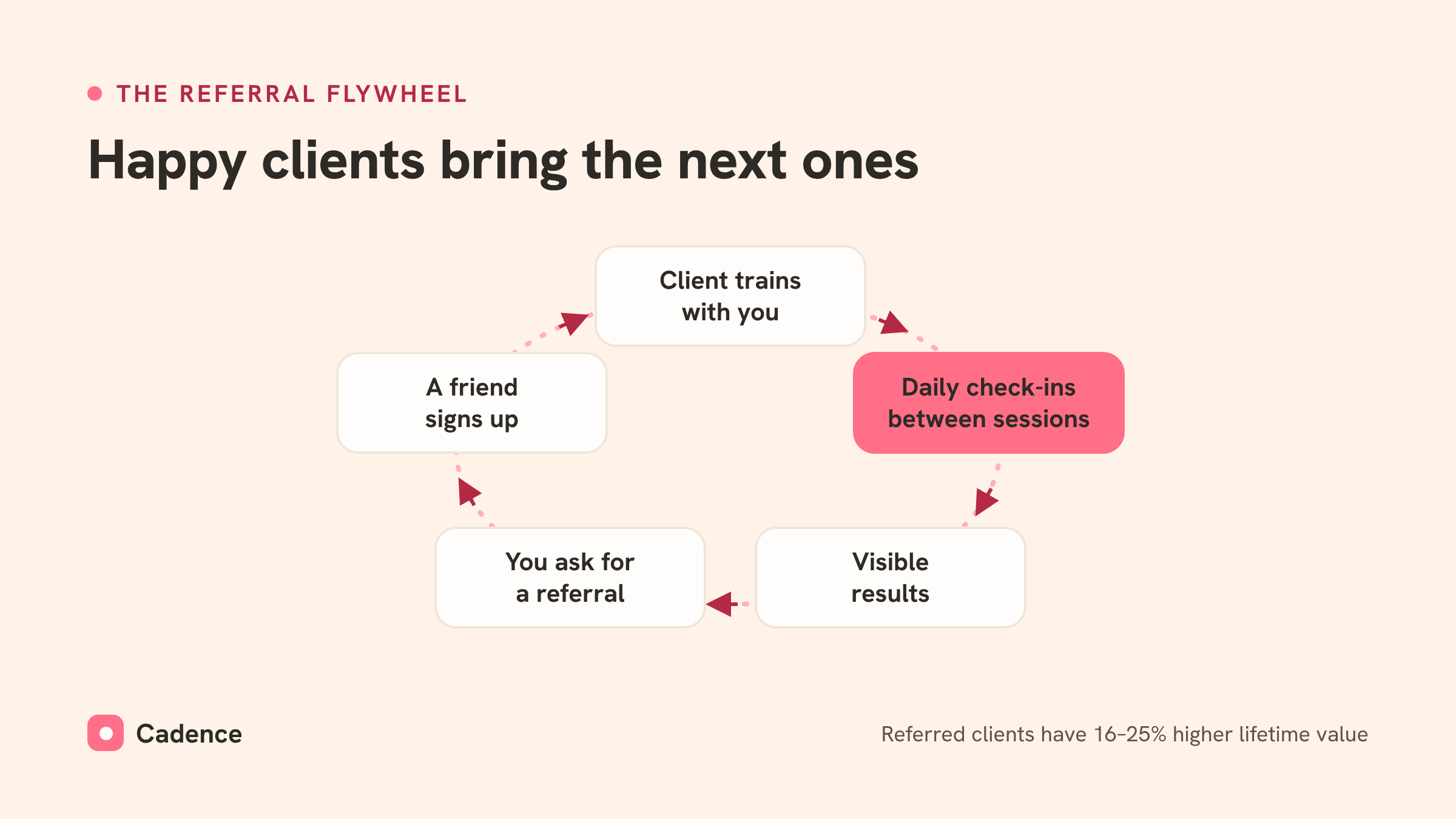
You can build a full client list with no social media at all. Referred customers are worth more, too: research on referral programs found that referred customers had 16–25% higher lifetime value and churned about 18% more slowly than customers won through ads.
7. Ask for referrals at the right moment
Most trainers wait for referrals to happen. The best ones ask, at the moment the client is happiest.
- Ask after a win: a first pull-up, a new PR, 5 kg down, the end of a block.
- Make it specific: "Who's one friend who keeps saying they want to start training?"
- Make it easy: offer a free session they can give to that friend, and train them together.
- Say thank you: a free session or a small discount for every friend who signs up.
8. Partner with local businesses
Physiotherapists, nutritionists, doctors, massage therapists and running clubs all meet people who need a trainer. Local partners send warm leads that cost you nothing but time.
- Pick three businesses that serve your ideal client.
- Offer a free session for their staff, so they know your work firsthand.
- Agree on a simple two-way referral: you send clients to them, they send clients to you.
9. Pick a niche
Trainers say niche specialisation (27.9%) and customer service (31%) set them apart. Only 3.1% compete on lower prices.
One niche is big and under-served: 55% of trainers' clients are 46 or older, yet these clients are the least reachable on social media. A trainer known for "strength after 45", "training after pregnancy" or "back-pain-free lifting" gets referred by name.
10. Launch a January challenge or small group
36.4% of trainers get most of their new clients in January. Prepare in December, not in January.
- Run a 4- or 6-week challenge with a fixed start date and a small group price.
- Ask current clients to bring a friend.
- Offer a 1:1 package to everyone who finishes.
Groups also keep people longer. Group training members stay an average of 22.6 months, compared with 16.2 months for gym-floor-only members.
11. Keep clients engaged between sessions
The cheapest new client is the one you don't lose. Research suggests about 50% of people who start an exercise program drop out within six months. Every client who stays keeps paying and is your next source of referrals.
Most drop-off happens between sessions, not during them. A client trains with you twice a week, and then spends the other five days alone with their food, sleep and doubts.
- Daily check-ins: weight, meals, steps, how the workout felt. A short form is enough.
- Reply on the day: one line of feedback on the check-in, not a weekly wall of text.
- Spot drop-off early: a missed check-in or a skipped workout is your signal to message first.
- Plan the week ahead: clients who can see the next sessions in advance show up more.
The data backs this up. Gym members who track habits through mobile apps show 30% higher retention, and mobile exercise apps rank among the top fitness trends for 2027.
Go deeper with our guides on weekly check-in questions and how to keep coaching clients from quitting.
How Cadence helps. Clients log weight, meals, macros, notes and photos every day, and you reply on the day. They see their calorie and macro targets with progress and adherence, you plan training sessions ahead and see what was done or missed, and every client lives in one place instead of WhatsApp threads and spreadsheets. It works for trainers in the gym and online coaches.
FAQ
How do new personal trainers get their first clients?
Start with people who already know you: friends, family, coworkers and regulars at your gym. Offer a few free or discounted sessions in exchange for honest feedback and a testimonial. Then ask each of them for one referral. Most trainers need six months to a year to build a steady full-time client base.
What is the best way to get personal training clients?
Referrals. 69% of trainers name word of mouth as their main source of new clients. Build a habit of asking for referrals after client wins, and keep clients engaged so they have results worth talking about.
How do I get personal training clients on Instagram?
Make your bio say who you help and how to start. Post client stories every week, teach one thing per post, and use Stories for proof. Instagram is the platform trainers rate most effective (27.9%), and testimonials are the content type that works best.
How many clients does a personal trainer need?
It depends on your price and how many hours you want to coach. A full-time in-person trainer often runs 20–30 sessions a week. Online coaches can manage more clients because check-ins take less time than live sessions, especially with an app.
When is the best time to get new personal training clients?
January. 36.4% of trainers get most of their new clients that month, and 36% of sign-ups fall between January and March. Plan your offer and content in December.